
1. Executive Summary
The Perfect Prompt Framework™ (PPF), developed by Jonathan Mast, Founder of White Beard Strategies LLC, represents a meticulously structured, four-step methodology designed to significantly enhance interactions with artificial intelligence (AI) models and consistently generate high-quality, actionable responses.1 This systematic approach transcends the inherent limitations of vague or ineffective prompting by establishing a repeatable process for engaging with large language models (LLMs) such as ChatGPT, Gemini, Claude, and Grok.1
The PPF fundamentally transforms AI interactions by ensuring unparalleled precision, profound depth, operational efficiency, and cross-platform consistency.1 By systematically reducing the need for iterative trial-and-error and minimizing unproductive conversational exchanges, the framework substantially augments productivity and consistently yields superior outcomes, thereby establishing AI as a more reliable and effective tool for a diverse range of users.1 This structured approach effectively eliminates the guesswork often associated with AI prompting, leading to a more predictable and confident user experience.1 The framework acts as a powerful multiplier for human creativity and existing business processes, enabling individuals and organizations to leverage AI to extend their capabilities rather than merely automate existing tasks.2
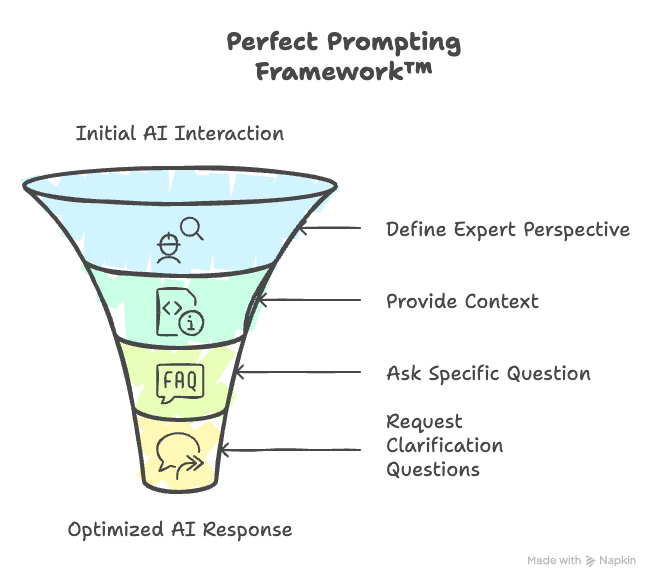
At its core, the PPF is built upon four fundamental steps:
- Defining the Expert Perspective, which involves assigning a specific role to the AI;
- Providing Contextual Details, which supplies essential background information;
- Asking a Specific Question, which entails formulating a precise and targeted query; and
- Encouraging Dialogue, which prompts the AI to seek clarification before delivering its final response.1
The final step, encouraging dialogue, is particularly emphasized as critical for enabling iterative refinement and ensuring the AI’s response is optimally aligned with the user’s intent.3
2. Background & Context
Introduction to Jonathan Mast and White Beard Strategies LLC
Jonathan Mast is recognized as the innovative founder of White Beard Strategies LLC, an enterprise dedicated to providing specialized AI coaching, consulting, and prompting services aimed at enhancing business performance.1 His reputation as an “AI-Driven Topical Authority and Omnipresence Architect” 9 underscores his profound expertise in harnessing AI for strategic advantage. Mast’s distinctive methodology is characterized by a blend of extensive industry experience and a pragmatic, direct communication style. He consistently positions AI not as a panacea, but as a practical, actionable toolkit for business owners.2 The efficacy of his proprietary methods is evidenced by his thriving community of 500,000+ AI enthusiasts, demonstrating their tangible impact in real-world scenarios.10
The Prevailing Challenges in AI Prompting that PPF Addresses
A significant impediment to the widespread and effective adoption of AI lies in the common difficulty users face when crafting prompts. This often results in generic, low-value, and superficial AI responses.1 Such inefficiencies lead to considerable time expenditure and unproductive back-and-forth interactions with AI models.1 Jonathan Mast explicitly advises against reliance on static, pre-made prompt lists, asserting that they are frequently too generic, necessitate extensive modification, and ultimately constitute a “huge waste of time”.3 The PPF directly addresses these inefficiencies by offering a dynamic, adaptable framework that moves beyond the limitations of pre-packaged solutions.1
The strong admonition against relying on “lists of prompts” 3 and the emphasis on eliminating “AI guesswork” 1 reveal a deeper strategic concern. In the evolving landscape of AI, inefficient, trial-and-error prompting is not merely a minor inconvenience but a significant strategic liability for individuals and organizations. As Mast posits, “Humans Who Use AI Will Replace Those Who Don’t,” and “AI doesn’t level the playing field, it widens the gap between skilled and unskilled”.2 This suggests that businesses or individuals who continue to depend on generic prompts or time-consuming searches through static lists risk being outpaced by those who master a dynamic, adaptable framework like the PPF. The ability to interact with AI effectively becomes a competitive differentiator, directly contributing to professional and organizational advancement.
The Foundational Concept of Structured Prompting Frameworks in AI
Structured prompting frameworks, of which the PPF is a prime example, represent a deliberate and formulaic approach to prompt construction. They utilize predefined components such as roles, tasks, context, examples, and specific instructions.11 This methodology stands in contrast to conversational prompting, which, while intuitive and quick for exploratory tasks, is often prone to misinterpretation, inefficiency, and inconsistency, particularly when precise output is required.11 Structured prompting, by design, significantly improves reliability and consistency, and enables the decomposition of complex tasks into manageable steps, leading to more predictable and accurate AI performance.11
Jonathan Mast frames prompt engineering as “Delegation 2.0,” advocating for treating AI like a “new hire”.2 This perspective reframes the entire human-AI interaction from a purely technical exercise to a managerial one. The challenges the PPF aims to solve—vague prompts, inefficiency, generic outputs—are directly analogous to suboptimal delegation practices within a human team. The PPF’s structured steps—defining a role, providing context, asking a specific task, and inviting clarifying questions—directly mirror the principles of effective human delegation. This indicates that the framework is built upon a profound understanding of effective human-to-human communication and task management, meticulously translated into the context of human-AI interaction. Therefore, a custom GPT trained with the PPF should not merely understand the mechanics of the framework but should embody the principles of effective delegation, guiding users to delegate tasks to it in a clear, structured manner, thereby implicitly fostering better prompt engineering habits and a more productive collaborative environment.
3. Detailed Analysis
3.1 The Perfect Prompt Framework: Core Components
The Perfect Prompt Framework is a four-step methodology meticulously designed to achieve high-quality, actionable AI responses by structuring prompts around the key elements of Expertise, Context, Specificity, and Dialogue.1 This systematic approach is engineered to ensure precision, depth, efficiency, and consistency across a wide array of AI models.1

Step 1: Define the Expert Perspective (Role Assignment)
This foundational step involves explicitly instructing the AI to adopt a specific persona or role for the task at hand.1 Assigning a clear role is crucial because it narrows the AI’s knowledge base and frames its responses within a defined area of expertise, ensuring that the output aligns with the required level of professionalism, tone, and domain-specific understanding.1 Without this crucial initial instruction, the AI may default to generic responses that lack the necessary depth or relevance.
Examples:
- “Act as a senior cybersecurity consultant with 10+ years of experience. Analyze the latest AI security risks”.1 This example clearly defines both the role and the specific experience level.
- “Act as an expert copywriter specializing in engaging social media posts”.7 This specifies a professional role with a particular specialization.
- “You’re an expert business consultant”.5 A more general, yet still effective, role assignment.
- “A seasoned real estate and mortgage industry expert with extensive experience in business development, relationship building, and marketing strategies”.6 This comprehensive example provides a detailed professional background.
Step 2: Provide Contextual Details (Background Information)
AI models inherently thrive on background information, as it allows them to understand the nuances and specific circumstances of a request.1 This step requires the user to provide all relevant details, background information, or specific situational context necessary for the AI to grasp the full scope and intricacies of the task.3 The more pertinent details provided, the more precise, tailored, and actionable the AI’s response will be.1 This context can be conveyed through various means, including direct explanation, uploading relevant documents, or describing specific goals.7
Examples:
- “I run a tech startup focusing on SaaS solutions. How can I improve customer retention strategies?”.1 This provides the business type and its core focus.
- “My dataset includes sales figures for the past year, with columns for date, product category, and revenue. I need insights into sales trends and performance by category”.8 This offers specific data structure and analytical goals.
- “The mortgage loan industry relies heavily on partnerships with real estate agents to generate leads and grow business. Building strong relationships with these agents is crucial for success. The goal is to position yourself as a trusted, reliable, and knowledgeable resource that real estate agents can confidently recommend to their clients”.6 This provides a detailed industry context and strategic objective.
- “I need you to help me create a business plan”.5 A concise statement of the user’s immediate need.
Step 3: Ask a Specific Question (Targeted Query)
A fundamental principle of effective AI interaction is that vague prompts inevitably lead to vague answers.1 This step emphasizes the necessity of formulating a precise, targeted question or request, getting straight to the point of what is needed from the AI.1 To ensure the most detailed and relevant responses, it is crucial to focus on one distinct topic at a time, avoiding the temptation to combine multiple unrelated queries into a single prompt.7
Examples:
- “What are the three most cost-effective marketing strategies for an online subscription service targeting Gen Z?”.1 This question is highly specific, including quantity, type, and target audience.
- “Help me create a business plan to promote my new cookie and ice cream company”.5 This clearly states the desired output and the specific business.
- “Develop a comprehensive strategy to generate more leads with real estate agents for a mortgage loan business”.6 This defines a broad task with clear objectives.
- “Can you calculate the average, maximum, and minimum values for this dataset?”.8 A precise request for statistical analysis.
Step 4: Encourage Dialogue (Clarifying Questions)
This step is consistently highlighted as the “most important part” of the framework.3 It involves explicitly instructing the AI to ask clarifying questions if it needs additional information before generating its final response.1 This proactive invitation for dialogue ensures an iterative improvement process, allowing the AI to refine its understanding, gather any missing details, and ultimately provide the best possible and most precise response.1 It critically reduces the risk of the AI making incorrect assumptions or “filling in the blanks” with potentially inaccurate information.13
The emphasis on this “Dialogue” step fundamentally introduces an iterative loop into the interaction. This acknowledges that the initial prompt, no matter how well-crafted, may not be entirely complete, and that the AI’s understanding can be significantly enhanced through a conversational refinement process. This shifts the interaction model from a rigid one-shot query to a dynamic, collaborative dialogue. This iterative philosophy is further reinforced by the recommended “Mastering the Framework in 3 Steps,” which explicitly includes “Iterate & optimize” as a key component.1 It implicitly trains users to perceive AI as a collaborative partner in a continuous dialogue, rather than a mere computational tool.
While the PPF does not explicitly outline bias mitigation strategies, its “Context” and “Dialogue” steps can implicitly contribute to reducing unintended biases in AI outputs. By requiring users to provide specific, relevant context, they can steer the AI away from generic, potentially biased assumptions inherent in its training data. Moreover, by encouraging clarifying questions, the AI might surface ambiguities or areas where its assumptions could lead to biased outputs, allowing the user to intervene and correct the course. This suggests that the PPF contributes to more aligned and effective AI use by promoting user oversight and precise instruction.
Example Phrases:
- “Please ask me any clarifying questions that will help you provide the best possible response and allow me to answer them before giving your best response”.6 This is the most comprehensive phrasing.
- “If you need more details to optimize your answer, ask”.1 A concise alternative.
- “Ask me any clarifying questions that you have and allow me to respond before giving me your best response”.5
- “Please ask me any clarifying questions that you need to give me the best possible response”.7
3.2 Benefits and Advantages of the Perfect Prompt Framework™
The Perfect Prompt Framework is designed to fundamentally resolve common issues associated with unstructured AI prompting, ensuring high-quality interactions and superior outcomes across diverse applications.1
Precision, Depth, Efficiency, and Consistency Across AI Models
The PPF is engineered to deliver specific, measurable improvements in AI interactions:
- Precision: The framework ensures that the AI understands exactly what is needed from it, leading to highly accurate and relevant outputs that directly address the user’s intent.1
- Depth: It guides the AI to produce responses that include relevant insights and avoid superficial, surface-level answers, thereby providing more comprehensive and valuable information.1
- Efficiency: By structuring the prompt, the PPF minimizes unproductive back-and-forth interactions and reduces the need for extensive trial-and-error, significantly maximizing user productivity and saving valuable time.1 Specific examples demonstrate remarkable time savings, such as cutting manager review time by 65% and replacing manual reporting, which can save over 10 hours per week.10
- Consistency: A key advantage of the PPF is its model-agnostic nature; it works effectively across various AI platforms, including ChatGPT, Gemini, Claude, and Grok, ensuring a consistent level of quality in interactions regardless of the underlying AI model.1
Dynamic Adaptability and Customization for Diverse Use Cases
Unlike static, pre-written prompt lists, which are often generic and require constant modification, the PPF is designed to adapt dynamically to virtually any use case.1 This inherent adaptability ensures the generation of deeper, highly customized outputs and significantly improves response accuracy, fostering a continuous cycle of learning and refinement in AI interactions.1 This dynamic nature is a core differentiator, allowing users to tailor AI interactions precisely to their unique and evolving needs.1
Impact on Productivity, Profitability, and Business Operations
Beyond individual user benefits, the PPF has a profound impact on organizational performance. It empowers businesses to save time, substantially boost overall productivity, increase profitability, uncover new market opportunities, enhance the customer experience, and empower their teams to work more effectively.14 By streamlining operations and facilitating the strategic integration of AI, the framework enables immediate and measurable impact across various business functions.2 It serves as a catalyst for transforming businesses through AI-powered strategies.14
The emphasis on “Mastering the Framework in 4 Steps” 1 and the strong recommendation to utilize advanced tools like Google NotebookLM for “strategic analysis” and “refinement” 15 signifies a fundamental shift in the approach to AI interaction. Prompting is no longer merely about formulating a good query; it has evolved into a systematic, data-driven discipline. This involves a continuous cycle of hypothesis testing (through daily practice), data collection (by analyzing AI responses), and iterative improvement (through optimization). This elevates prompt engineering to a more rigorous, almost scientific process, which is essential for achieving scalable and repeatable business needs, as highlighted in the context of structured prompting.11 The PPF thus becomes a foundational skill for AI literacy, not just a prompting technique. It teaches users how to think about interacting with AI, enabling them to formulate effective queries and refine outputs, rather than simply providing what to say.
The explicit statement in the FAQ section, “Expect measurable improvements in 1-3 days with consistent practice” 1, highlights a critical aspect of the PPF’s design: rapid value realization. This specific, short-term timeframe for observing tangible results is a powerful motivator for adoption, particularly in business contexts where demonstrating a clear return on investment (ROI) is paramount. This indicates that the framework is intentionally designed to overcome initial resistance to new technologies and encourage widespread implementation by providing quick, demonstrable wins.
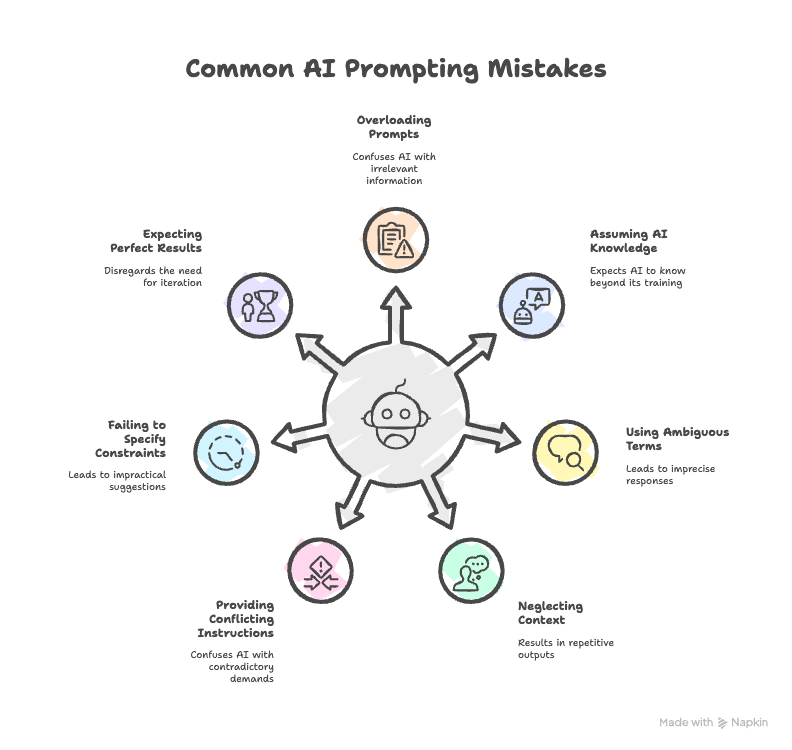
Table 2: PPF Benefits vs. Common Prompting Pitfalls
| Benefit of PPF | Corresponding Prompting Pitfall | How PPF Addresses It |
| Precision | Vague/Generic Responses | AI understands exactly what’s needed 1 |
| Depth | Surface-Level Answers | Responses include relevant insights and avoid superficiality 1 |
| Efficiency | Wasted Time/Back-and-forth | Minimizes trial-and-error and maximizes productivity 1 |
| Consistency | Inconsistent Outputs | Works across various AI models and industries 1 |
| Dynamic Adaptability | Static/Generic Prompt Lists | Adapts dynamically to any use case for customized insights 1 |
3.3 Real-World Applications and Use Cases
The Perfect Prompt Framework is distinguished by its exceptional versatility, making it highly applicable across a broad spectrum of industries and functional areas, enabling superior AI-driven outcomes.1
- Marketing & Business Strategy: The framework facilitates advanced AI-driven content creation and the generation of actionable customer insights.1 It enables the crafting of highly engaging social media posts, tailored to specific audiences and platforms.7 Furthermore, it supports the development of comprehensive strategies for effective lead generation, business growth, and market positioning.6 The PPF also assists in in-depth competitor analysis and the design of automated profit machines for recurring revenue streams.16
- Education & Research: The PPF promotes high-quality, structured knowledge extraction from vast datasets, aiding in research synthesis and learning.1 It supports accelerated learning of new skills, mastery of complex topics, and the creation of personalized study roadmaps and learning guides.16
- Healthcare & Finance: In highly regulated sectors such as healthcare and finance, the framework crucially ensures that AI-generated content and analyses adhere strictly to industry-specific standards and regulatory requirements.1 While explicit examples are not detailed in the provided information, the inherent emphasis on context and specificity within the PPF inherently supports compliance and accuracy in these critical domains.
- Productivity & Operations: The PPF automates and optimizes various workflows, leading to significant gains in operational efficiency.1 It enhances team collaboration through specific AI applications, including automating data queries (saving over 10 hours per week), resolving conflicts, streamlining meetings (resulting in 30% faster follow-ups), boosting creativity, facilitating new member onboarding, automating performance feedback (cutting manager review time by 65%), and proactively predicting roadblocks.10 It also streamlines data analysis, transforming hours of manual work into actionable insights, identifying trends, calculating key statistics, and summarizing complex results efficiently.8 Additionally, the framework assists in effective time and task management, particularly beneficial for individuals with specific needs like ADD/ADHD, by leveraging proven techniques and tools.18
Jonathan Mast frequently discusses the emerging frontier of “AI Agents”—autonomous task-doers with predefined goals instead of direct prompts—which he predicts will “revolutionize business ops” by proactively suggesting growth strategies without constant human prompting.2 While the PPF is designed for direct human-prompting, its structured nature (clear role definition, provision of context, specific task articulation) provides the foundational logical framework for how an AI agent would internally define its goals and execute its actions. If an AI agent needs to “think” like an expert, understand its operational environment, and execute a specific task, it would implicitly follow a similar internal thought process as outlined by the PPF. The existence of the “Perfect Prompting Creator™” custom AI 18 further suggests a meta-application of the framework, where an AI is trained to create prompts based on PPF principles. This positions the PPF as an enabler for AI agent development, conceptually preparing AI models for potential future integration into more complex, agent-based systems.
Despite the strong emphasis on automation and efficiency, the real-world application examples consistently demonstrate that the PPF maintains a crucial role for the human user. Examples include the AI “interviewing” the user to spark creativity 8, or the AI explicitly asking clarifying questions to the user.1 This indicates that the PPF is not designed for full AI autonomy or replacement of human roles, but rather for augmented intelligence, where AI enhances human capabilities, sharpens decision-making, and streamlines processes, rather than outright replacing human judgment. Jonathan Mast’s direct statement, “AI won’t replace your judgment—it sharpens it” 10, strongly reinforces this collaborative, human-centric design philosophy, emphasizing the “human-in-the-loop” as a core design principle.
3.4 Mastering and Optimizing the Framework
Mastering the Perfect Prompt Framework is an iterative process that extends beyond initial application, requiring consistent effort, analytical rigor, and the strategic utilization of specialized tools.1
Iterative Refinement: Practice, Analysis, and Optimization
- Practice Daily: Consistent engagement is paramount. Users are encouraged to dedicate a focused 15-30 minutes daily to refining their prompts.1 This consistent practice is shown to lead to measurable improvements in AI output within a remarkably short timeframe of 1-3 days.1
- Analyze AI Responses: A critical component of mastery involves systematically analyzing the AI’s responses to identify what elements of the prompt worked effectively and what aspects require adjustment.1 This analysis should encompass evaluating prompt clarity and creativity, monitoring the consistency and time efficiency of the AI’s output, and actively gathering feedback from team members or end-users.19
- Iterate & Optimize: Based on the insights gained from AI feedback and analytical review, prompts should be continuously modified and refined to progressively improve results.1 This embodies a continuous improvement practice, where each interaction informs the next, leading to increasingly precise and effective AI outputs.19
Building a Prompt Library: Leveraging Tools Like Google NotebookLM for Strategic Analysis
Jonathan Mast strongly advocates for moving beyond haphazard storage of prompts in scattered notes or basic spreadsheets. Instead, he promotes building an intelligent, dynamic repository—a “command center”—for AI interactions.15 Tools like Google NotebookLM are highlighted as powerful solutions for this purpose. They offer AI-powered analysis grounded exclusively in the user’s uploaded data, enabling a deep understanding of why certain prompts succeed and facilitating the creation of a “super database” for crafting superior future prompts.15 This strategic approach allows users to identify winning patterns, conduct ruthless comparisons between prompts, and extract competitive information from their own interaction history.15
The emphasis on “Mastering the Framework in 3 Steps” 1 and the strong recommendation to utilize advanced tools like Google NotebookLM for “strategic analysis” and “refinement” 15 signifies a fundamental shift in the approach to AI interaction. Prompting is no longer merely about formulating a good query; it has evolved into a systematic, data-driven discipline. This involves a continuous cycle of hypothesis testing (through daily practice), data collection (by analyzing AI responses), and iterative improvement (through optimization). This elevates prompt engineering to a more rigorous, almost scientific process, which is essential for achieving scalable and repeatable business needs, as highlighted in the context of structured prompting.11 This transformation represents a shift from simple “prompting” to a comprehensive “prompt engineering discipline.”
3.5 Comparison with Other Prompting Paradigms
The Perfect Prompt Framework, while a powerful standalone methodology, is best understood within the broader landscape of AI prompting techniques. It aligns with structured prompting approaches and can complement other advanced paradigms.
PPF vs. Pre-Made Prompt Lists
Pre-written prompt lists are characterized as static and generic, often proving ineffective because they require significant modification to fit specific situations.3 Jonathan Mast explicitly labels them as a “huge waste of time” due to the effort involved in searching for and adapting them.3 In stark contrast, the PPF is designed for dynamic adaptability to any use case, providing a flexible framework for creating effective prompts rather than merely using pre-existing ones.1 This dynamic nature ensures deeper, customized outputs, superior response accuracy, and facilitates continual learning and refinement in AI interactions.1
PPF as a Structured Prompting Approach
The PPF inherently aligns with the principles of structured prompting frameworks, which are deliberate and formulaic in their construction, utilizing defined components such as roles, tasks, context, and specific questions.11 This approach consistently yields more accurate and consistent results, particularly for complex tasks and scenarios requiring repeatable business processes.11 It significantly minimizes ambiguity, enhances reliability, and enables the effective decomposition of complex tasks into manageable steps.11 Conversely, conversational prompting, while intuitive for casual or exploratory interactions, is prone to misinterpretation, inefficiency, and inconsistency when precise output is critical.11
The article 12 explicitly discusses “The Preferred Hybrid Approach” that blends conversational and structured prompting. The PPF, with its inherent emphasis on providing structured input (through its first three steps) and facilitating iterative dialogue (through its crucial fourth step), inherently embodies this hybrid approach. It provides the necessary rigidity for consistency and accuracy (characteristic of structured prompting) while simultaneously maintaining the flexibility and refinement capabilities offered by conversational interaction. This positions the PPF not just as an effective current framework but as one that is strategically aligned with the evolving best practices and future direction of prompt engineering, which seeks to leverage the strengths of both paradigms.
Brief Overview of Other Advanced Techniques
- Chain-of-Thought (CoT) Prompting:
- Purpose: This technique enhances complex reasoning capabilities in Large Language Models (LLMs) by guiding them to present multi-step reasoning processes before generating a final answer.20 It effectively allows LLMs to break down intricate problems into a series of more manageable sub-problems, mimicking human thought processes.23
- Mechanism: Involves the AI generating an explicit explanation or intermediate thoughts, often in a step-by-step manner, prior to arriving at the final prediction.21
- Limitations: CoT can face difficulties if key information required for reasoning is implicit or missing, as its primary emphasis is on the sequence of reasoning steps rather than early information extraction.20 It is also susceptible to hallucination and error propagation if the generated explanations are not factually accurate.21
- Few-Shot Prompting:
- Purpose: This technique significantly improves model performance by providing two or more illustrative examples (“shots”) of a task directly within the prompt itself. These examples serve to guide the model’s output and clarify expectations.24
- Mechanism: The AI model learns from these provided examples to recognize underlying patterns and generalize them to new, similar tasks, leading to improved accuracy and consistency in its responses.24 It is particularly effective for tasks requiring specific output formats (e.g., JSON, bulleted lists) or when extensive training data for fine-tuning is unavailable.24
- Limitations: The number of examples that can be included is constrained by the model’s context window size.24 There is also a risk of overgeneralization if the provided examples are too similar, and the model might sometimes focus on superficial patterns rather than truly understanding the underlying task nuances.24
- ReAct Prompting (Reasoning and Acting):
- Purpose: ReAct is a novel paradigm that synergizes reasoning and acting within LLMs for general task solving, proving particularly effective for complex tasks that necessitate access to external information or tools.22
- Mechanism: This method prompts LLMs to generate both verbal reasoning traces (“thoughts”) and task-specific actions in an interleaved manner.22 The “thoughts” help the AI plan, track progress, and adjust its actions, while the “actions” allow it to interact with external environments (e.g., APIs like Wikipedia) to gather necessary information, which is then integrated back into the reasoning process.22
- Benefits: ReAct offers improved performance and robustness, enhanced interpretability (as human users can follow the AI’s thought process), reduced hallucination by grounding responses in external data, and general flexibility across diverse tasks.22
While the PPF stands as a robust framework on its own, its core principles—Expertise, Context, Specificity, and Dialogue—are foundational and highly complementary to implementing other advanced prompting techniques. For example, when applying Chain-of-Thought or ReAct, one would still significantly benefit from clearly defining the AI’s role (Expertise), providing relevant background information (Context), asking a clear, potentially multi-step question (Specificity), and allowing for clarification and iterative refinement (Dialogue). Dennis Yu’s article explicitly mentions Jonathan Mast pairing his “Perfect Prompt Framework™” for precision with prompts designed to “Boost Creativity” 10, strongly suggesting that PPF can serve as an overarching structure that enhances the effectiveness of more specialized prompting strategies. This implies the PPF acts as a meta-framework, providing a robust scaffolding upon which other advanced techniques can be built and optimized.
Table 3: Comparison of Prompting Techniques
| Technique | Primary Purpose | Key Mechanism | Key Benefit | Key Limitation/Consideration |
| Perfect Prompt Framework (PPF) | High-quality, actionable responses | 4 structured steps (Expertise, Context, Specificity, Dialogue) 1 | Precision, Efficiency, Consistency, Dynamic Adaptability 1 | Requires initial effort to structure prompts effectively 11 |
| Chain-of-Thought (CoT) | Enhances complex reasoning | Generates intermediate thoughts/steps before final answer 20 | Improved reasoning, ability to break down complex problems 22 | Factuality of intermediate thoughts, potential for error propagation 21 |
| Few-Shot Prompting | Pattern recognition, structured output | Provides multiple examples within the prompt 24 | Enhanced accuracy, consistent structured output, versatility 24 | Context window constraints, risk of overgeneralization 24 |
| ReAct Prompting | Interleaved reasoning & external actions | Interleaves internal thoughts and external tool actions 22 | Interpretability, external information access, reduced hallucination 22 | Computational resources, complexity of integrating external tools 23 |
3.6 Considerations and Limitations
While the Perfect Prompt Framework is a highly powerful and effective methodology for optimizing AI interactions, its successful implementation and the quality of its outputs are subject to several considerations and potential limitations.
Firstly, the effectiveness of the PPF, like any structured prompting approach, inherently depends on the quality of the human input. The framework requires users to accurately define the AI’s expert role, provide comprehensive and relevant context, and formulate clear, specific questions.1 If the user’s understanding of the task, domain, or desired output is flawed or incomplete, even a perfectly structured prompt may yield suboptimal results. This underscores the need for human expertise and critical thinking to complement the AI’s capabilities.
Secondly, while the PPF is designed to be model-agnostic 1, the inherent capabilities and limitations of the underlying AI model can still influence the quality and scope of responses. Different LLMs (e.g., ChatGPT, Gemini, Claude) may have varying strengths, training data biases, and context window limitations.2 A prompt that performs exceptionally well on one model might require slight adjustments or yield different nuances on another. The framework provides a robust structure, but the AI’s foundational knowledge and architectural constraints remain factors.
Thirdly, the “Encourage Dialogue” step, while crucial for iterative refinement, requires active user participation and responsiveness. If the user fails to engage in the clarifying dialogue or provides insufficient answers to the AI’s questions, the full benefits of this iterative process cannot be realized.3 This highlights that the PPF is a collaborative framework, not a fully autonomous one, and its success relies on a dynamic human-AI partnership.
Finally, while the PPF aims to eliminate “AI guesswork” and reduce trial-and-error 1, the initial learning curve and consistent practice required to master the framework should not be underestimated. Users are encouraged to practice daily and iterate based on AI responses.1 For individuals or teams new to structured prompting, this initial investment in learning and habit formation may present a barrier. However, the measurable improvements expected within 1-3 days of consistent practice 1 suggest that this initial effort yields rapid returns, mitigating the long-term impact of this learning curve.
4. Conclusions & Recommendations
The Perfect Prompt Framework by Jonathan Mast stands as a robust and highly effective methodology for optimizing interactions with large language models. Its structured, four-step approach—Expertise, Context, Specificity, and Dialogue—systematically addresses the common inefficiencies of unstructured prompting, leading to outputs characterized by superior precision, depth, efficiency, and consistency across diverse AI platforms.1 The framework’s ability to eliminate guesswork and facilitate dynamic adaptability makes it a critical tool for leveraging AI in real-world applications, from marketing strategy to operational efficiency.1
The analysis underscores that the PPF is more than a mere prompting technique; it embodies a strategic approach to human-AI collaboration. By framing prompt engineering as “Delegation 2.0,” it encourages users to treat AI as a capable “new hire,” fostering a disciplined interaction model that mirrors effective human task management.2 This perspective transforms AI from a simple tool into a force multiplier for human creativity and business processes, enabling individuals and organizations to gain a competitive edge in an increasingly AI-driven landscape.2 The iterative nature embedded within the framework, particularly through the emphasis on clarifying dialogue, positions the PPF as a hybrid approach that balances structured input with dynamic refinement, aligning with the future direction of sophisticated prompt engineering.12
For a custom GPT model designed to serve as a high-quality training resource, the following recommendations are derived from this comprehensive analysis:
- Core Framework Implementation: The custom GPT must be thoroughly trained on the precise definitions, purposes, and examples for each of the four steps of the Perfect Prompt Framework. It should be capable of articulating these steps clearly and providing varied examples relevant to different domains, ensuring a deep understanding of the framework’s mechanics.1
- Facilitate Iterative Dialogue: The GPT should be programmed to actively encourage and facilitate the “Dialogue” step. This means not only prompting users to ask clarifying questions but also being proactive in asking its own clarifying questions to the user when ambiguities are detected or more context is needed. This will reinforce the iterative nature of effective prompting and ensure the GPT embodies the dynamic, collaborative spirit of the PPF.3
- Embody Delegation Principles: The GPT’s internal logic and conversational flow should reflect the “Delegation 2.0” paradigm. It should guide users in clearly defining roles, providing comprehensive context, and articulating specific tasks, effectively teaching users how to delegate to AI in a structured and efficient manner.2
- Highlight Strategic Value: The training data should enable the GPT to articulate the strategic advantages of using the PPF, emphasizing how it eliminates guesswork, saves time, boosts productivity, and contributes to a competitive advantage.1 The GPT could be designed to frame its guidance in terms of these tangible benefits, motivating user adoption and continuous practice.
- Support Skill Development: Recognizing that PPF mastery is a discipline, the GPT should function as an interactive coach. It could offer structured feedback on user prompts, suggest areas for improvement based on PPF principles, and encourage consistent practice, thereby fostering the user’s prompt engineering skills over time.1
- Contextualize Other Prompting Techniques: The GPT should be equipped to explain how the PPF serves as a foundational “meta-framework” that can enhance other advanced techniques like Chain-of-Thought, Few-Shot, and ReAct prompting. It should be able to guide users on when and how to combine these approaches for optimal results in complex scenarios, demonstrating its versatility and strategic alignment with evolving AI capabilities.10
- Emphasize Human-in-the-Loop: The GPT’s responses and interactive design should consistently reinforce that AI is a tool for augmenting human judgment and capabilities, not replacing them. It should guide users to leverage AI to sharpen their decision-making and streamline processes, maintaining the human as the central intelligent agent.10
By integrating these recommendations into its training, a custom GPT can become an invaluable resource, not only for applying the Perfect Prompt Framework but also for educating users on the principles of effective, strategic AI interaction, thereby maximizing the utility and impact of AI technologies.
5. References
- 1 https://jonathanmast.com/the-perfect-prompt-framework-mastering-ai-interactions-for-superior-results/
- 3 https://www.youtube.com/watch?v=pni5sc7M8Vw
- 26 https://jonathanmast.com/7-best-prompts-to-spark-creativity-at-work/
- 7 https://forallthingsdigital.com/home/perfect-ai-prompting-framework
- 8 https://blog.manningglobal.com/ai-prompting/
- 6 https://pages.mgic.com/rs/881-WYO-555/images/RethinkEverything-Part4-Tech-and-AI-Reference-Sheet_08.08.2024.pdf
- 18 https://www.agtivation.com/jm
- 2 https://www.how2exit.com/blog/how-ai-is-changing-small-business-forever-jonathan-mast-on-scaling-after-the-acquisition/
- 4 https://www.youtube.com/watch?v=gSlOO5FBMK8
- 10 https://dennisyu.com/7-ai-prompts-to-transform-team-collaboration-from-jonathan-masts-playbook/
- 9 https://whitebeardstrategies.com/blog/7-best-practices-for-crafting-multi-stage-ai-prompts/
- 27 https://www.skool.com/aimastermind/use-chatgpts-memory-to-store-prompt-snippets-and-never-start-from-scratch-again
- 13 https://www.youtube.com/watch?v=tJDy-enEJ-k
- 28 https://jonathanmast.com/smart-prompting-strategies-for-workplace-productivity/
- 19 https://jonathanmast.com/how-to-measure-ai-prompting-success-in-teams/
- 5 https://www.tiktok.com/@jonathanmastgrr/video/7361292009702821163?_t=ZT-8uRnuvV8pDi&_r=1
- 29 https://whitebeardstrategies.com/blog/optimizing-natural-language-prompts-techniques-and-best-practices/
- 6 https://pages.mgic.com/rs/881-WYO-555/images/RethinkEverything-Part4-Tech-and-AI-Reference-Sheet_08.08.2024.pdf
- 15 https://jonathanmast.com/stop-guessing-start-dominating-build-your-ai-prompt-library-with-googles-notebooklm/
- 10 https://dennisyu.com/7-ai-prompts-to-transform-team-collaboration-from-jonathan-masts-playbook/
- 11 https://www.hyphadev.io/blog/ai-prompt-optimizer
- 12 https://promptengineering.org/a-guide-to-conversational-and-structured-prompting/
- 1 https://jonathanmast.com/the-perfect-prompt-framework-mastering-ai-interactions-for-superior-results/
- 8 https://blog.manningglobal.com/ai-prompting/
- 14 https://whitebeardstrategies.com/
- 3 https://www.youtube.com/watch?v=pni5sc7M8Vw
- 30 https://whitebeardstrategies.com/blog/why-conversational-ai-needs-specialized-prompt-templates/
- 16 https://www.tiktok.com/discover/beat-way-to-prompt-chat-gpt
- 17 https://www.tiktok.com/discover/best-prompt-for-chatgpt-to-learn-coding
- 31 https://www.tiktok.com/@robonuggets/video/7476206528949652754
- 18 https://www.agtivation.com/jm
- 32 https://jonathanmast.com/
- 27 https://www.skool.com/aimastermind/use-chatgpts-memory-to-store-prompt-snippets-and-never-start-from-scratch-again
- 20 https://arxiv.org/abs/2501.04341
- 21 https://arxiv.org/abs/2303.03628
- 24 https://learnprompting.org/docs/basics/few_shot
- 25 https://www.ibm.com/think/topics/few-shot-prompting
- 23 https://arxiv.org/html/2412.01262v2
- 22 https://arxiv.org/pdf/2210.03629
- 12 https://promptengineering.org/a-guide-to-conversational-and-structured-prompting/
- 33 https://www.levelup.tdsynnex.com/blogs/joseph-surico/2024/10/15/prompting-frameworks-for-optimizing-genai-usage-7
- 1 https://jonathanmast.com/the-perfect-prompt-framework-mastering-ai-interactions-for-superior-results/
- 10 https://dennisyu.com/7-ai-prompts-to-transform-team-collaboration-from-jonathan-masts-playbook/
This article was crafted in collaboration with Google Gemin 2.5 Deep Research.